









































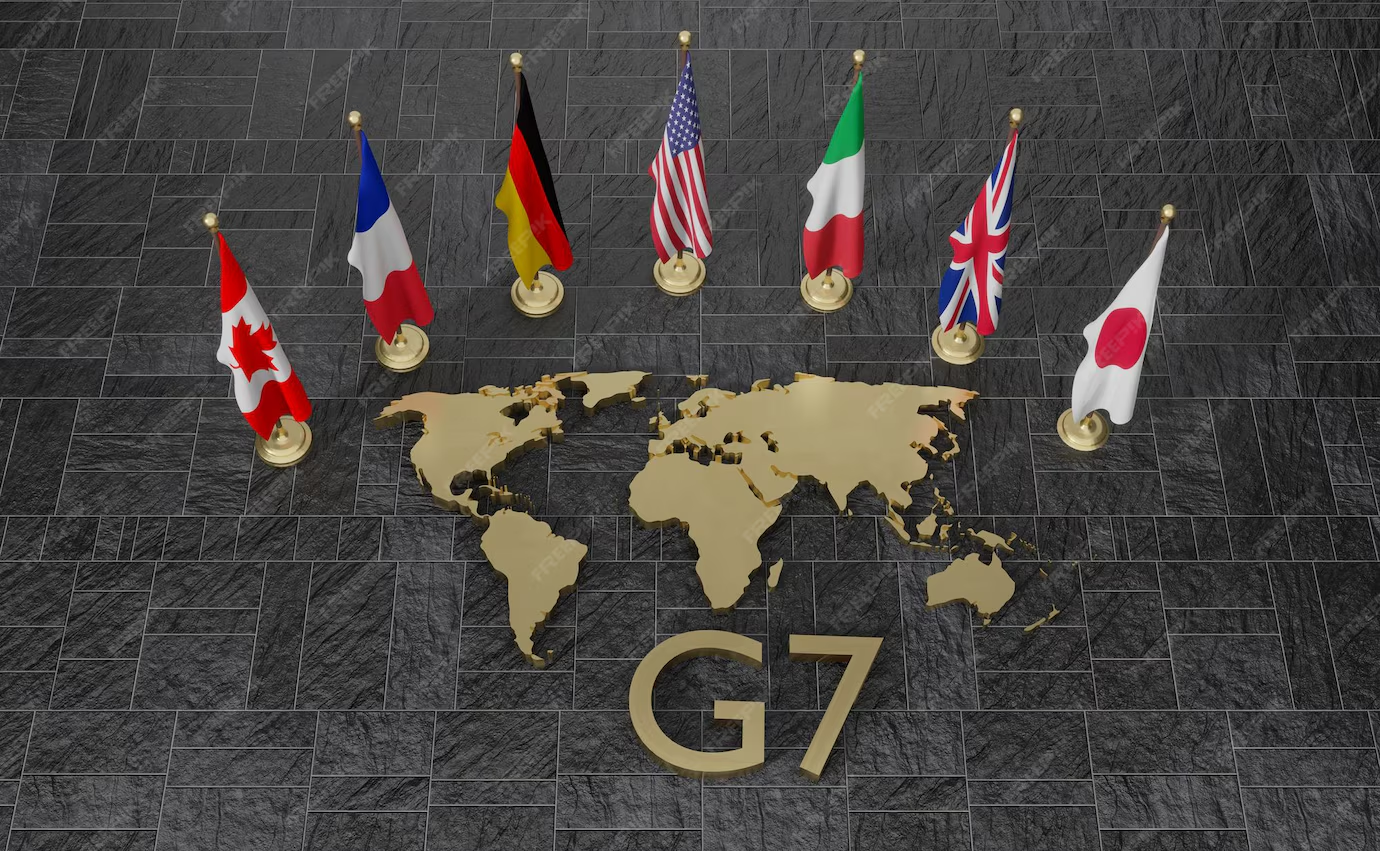
New Delhi: India will not release its strategic oil reserves into global markets, even as the Group of Seven (G7) countries consider tapping emergency supplies to stabilise energy markets amid the ongoing tensions involving the United States, Iran and Israel.
The clarification follows reports that G7 nations are discussing the possibility of releasing crude oil from emergency reserves in coordination with the International Energy Agency (IEA) to address potential supply disruptions caused by the escalating conflict.
The Group of Seven (G7) includes Canada, France, Germany, Italy, Japan, the United Kingdom and the United States, along with the European Union.

According to sources, the bloc could release around 400 million barrels of oil from emergency reserves if the situation worsens. However, India is not a member of the G7 or the International Energy Agency, and therefore is not part of the discussions.
Reports suggest that at least three G7 countries, including the United States, have supported the idea of releasing emergency oil reserves. G7 finance ministers are expected to hold discussions with IEA Executive Director Fatih Birol to evaluate the impact of the conflict on global energy markets.
Oil prices surged sharply on Monday amid concerns over supply disruptions and reduced production from major suppliers. Brent crude, the global benchmark, briefly rose to around $120 per barrel, the highest level since mid-2022, before easing to about $100 per barrel.
Emergency oil reserves were established when the International Energy Agency was formed in 1974, following the Arab oil embargo. During that crisis, members of the Organization of Arab Petroleum Exporting Countries (OAPEC), led by Saudi Arabia, halted oil shipments to countries supporting Israel during the Yom Kippur War, triggering fuel shortages and sharp price increases worldwide.
Under IEA rules, member countries are required to maintain strategic petroleum reserves as part of a coordinated system designed to respond to major disruptions in global oil supply.