








































Washington, April 5, 2026: The United States has moved to deploy advanced long-range stealth cruise missiles, known as AGM-158 JASSM (Joint Air-to-Surface Standoff Missile), as part of its escalating military strategy against Iran. The development marks a significant step in the ongoing conflict, highlighting Washington’s focus on precision strikes while minimizing exposure to enemy air defenses.
The AGM-158 JASSM, manufactured by Lockheed Martin, is designed to strike targets from outside the range of enemy radar and air defense systems. These missiles can hit targets located over 500 nautical miles (around 930 km) away, allowing US aircraft to launch attacks without entering heavily defended airspace.
One of the key features of the missile is its stealth capability, which enables it to evade radar detection. Equipped with advanced infrared seekers and anti-jamming GPS systems, the missile can accurately identify and destroy high-value targets even in complex combat environments.

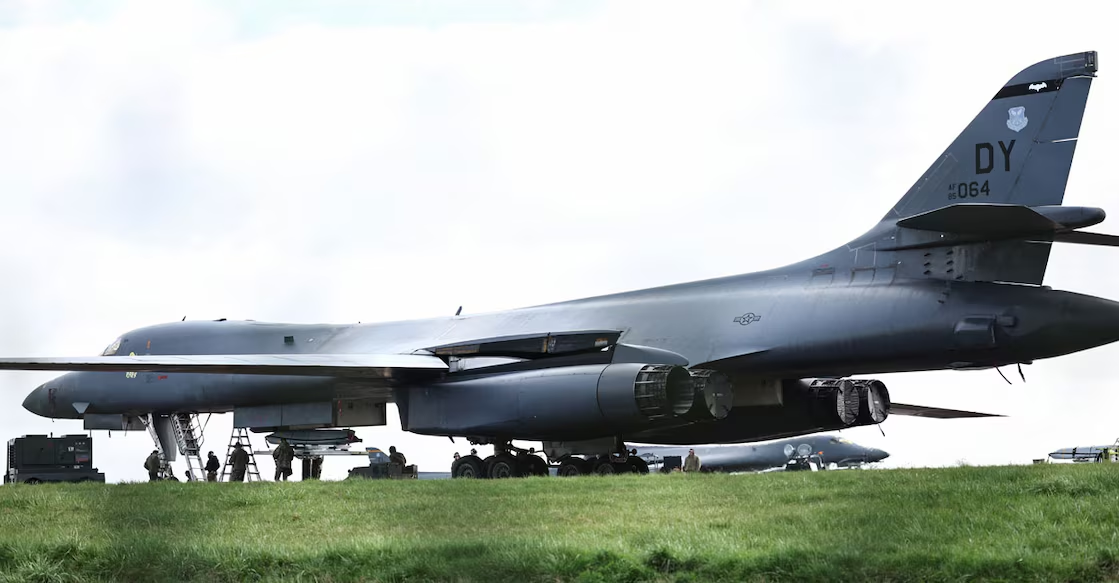
Weighing around 1,000 pounds, the missile carries a powerful penetrator warhead capable of striking hardened and fortified targets. It can be launched from a range of platforms, including fighter jets such as F-15 and F-16, as well as heavy bombers like the B-1B and B-52H, giving the US military significant operational flexibility.
Reports suggest that the US has already used a large number of these missiles in the early stages of the conflict, underlining the intensity of the ongoing military campaign. The deployment is part of a broader strategy to neutralize key Iranian military infrastructure, including missile systems and command networks.
Analysts note that the use of long-range standoff weapons like the JASSM reduces risks to pilots while enabling deep strikes into enemy territory. The move also reflects a shift towards high-precision, technology-driven warfare aimed at overcoming sophisticated air defense systems.
As tensions continue to rise in the region, the deployment of such advanced weaponry signals a further escalation, raising concerns about prolonged conflict and its wider geopolitical implications.