








































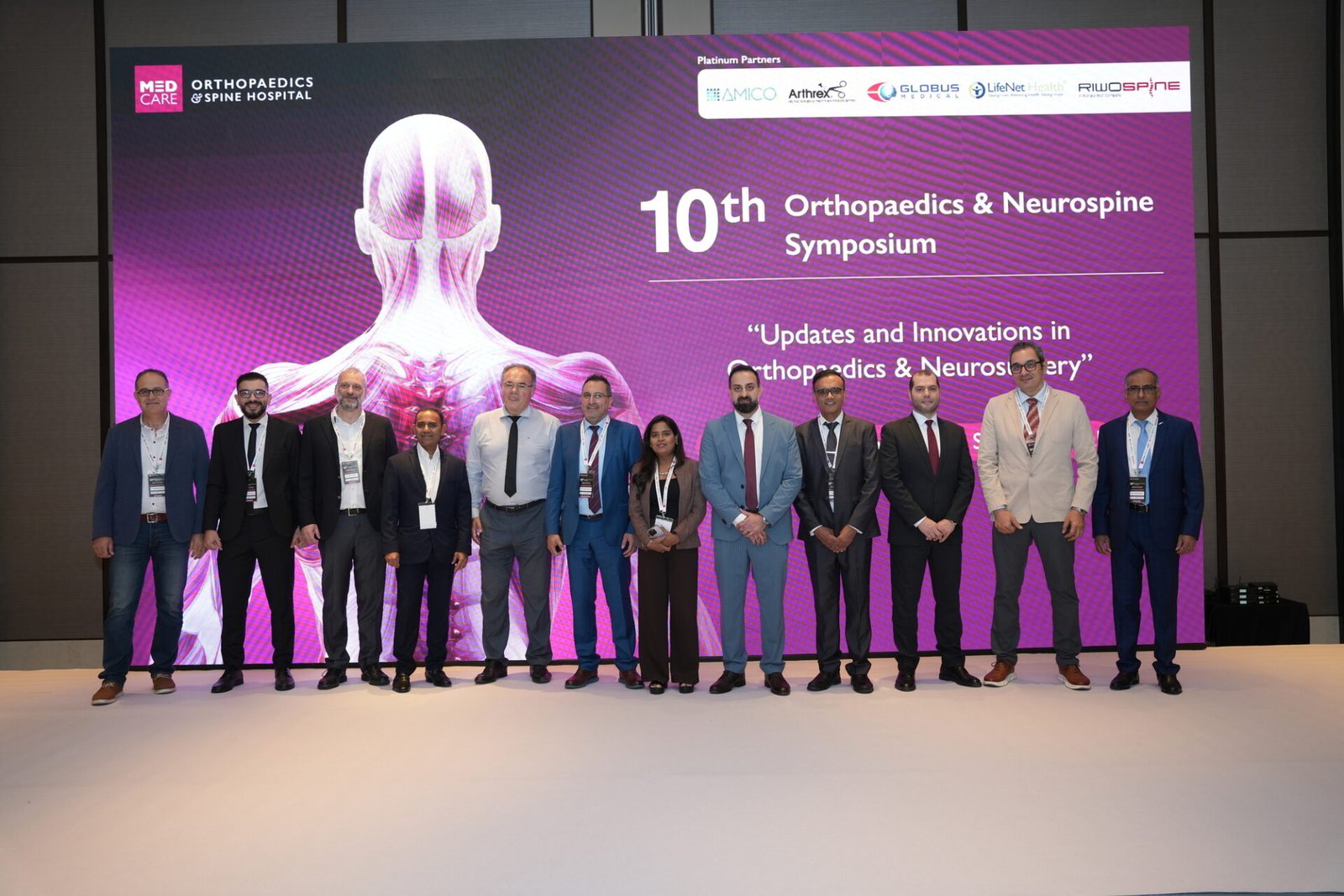
Major orthopaedic, brain and spine surgeries are now safer and more precise than ever before, thanks to advances in minimally invasive and microsurgical techniques, according to experts speaking at the 10th Medcare Orthopaedics & Neuro-Spine Symposium in Dubai.
Hosted by Medcare Orthopaedics & Spine Hospital at Sky View Downtown Dubai, the annual continuing medical education forum brought together regional and international specialists to discuss the latest developments in orthopaedics, neurosurgery, and spine care.
Experts noted that procedures once associated with prolonged recovery periods and significant surgical risks are increasingly being replaced by precision-driven approaches that preserve function, reduce post-operative pain, shorten hospital stays, and help patients return to normal life sooner.

Dr. Shanila Laiju, Group CEO of Medcare Hospitals, said the symposium serves as an important platform to translate innovation into real patient benefits. “By bringing together experts across orthopaedics and neurosurgery, we are focused on ensuring that surgical advancements lead to measurable improvements in safety, recovery time, and overall quality of life, while remaining aligned with global best practices,” she said.
Dr. Azzam Fayyad, Medical Director at Medcare Orthopaedics & Spine Hospital and Chairperson of the Symposium, highlighted the hospital’s comprehensive orthopaedic capabilities. He noted that the hospital performs thousands of orthopaedic surgeries annually, covering the full spectrum of subspecialities including joint replacement, hand and arm reconstruction, microsurgery, and foot and ankle surgery. “Having subspecialised experts under one roof ensures collaborative care and the highest level of surgical expertise,” he said.
On the neurosurgical front, Dr. Thaer Darwish, Head of Neuro & Spine Surgery and Symposium Chairperson, emphasised the transformative role of robotic and AI-powered navigation systems in complex brain and spine procedures. “The smallest deviation in neurosurgery can have serious consequences. With advanced robotic and AI-supported navigation, we are achieving unprecedented accuracy, reducing complications, and significantly improving recovery times,” he said.
Consultant Neuro & Spine Surgeon Dr. Gopalakrishnan explained that modern microsurgical techniques allow surgeons to remove brain tumours with greater precision while protecting healthy tissue. Enhanced visualisation, refined instruments, and real-time monitoring have significantly reduced post-operative pain and recovery time, particularly when combined with early diagnosis.
The programme also featured sessions by leading regional specialists covering innovations in shoulder and joint repair, artificial ligaments, minimally invasive foot and ankle surgery, scoliosis management, degenerative spine deformities, and complex revision spine surgeries.
Speakers noted that with rising life expectancy and increasing posture-related spine disorders in the region, demand for safer, less invasive surgical interventions is growing rapidly. Experts concluded that modern surgical techniques are not only expanding what is medically possible but are also helping to address long-standing patient concerns about pain, disability, and extended rehabilitation.
Medcare operates under Aster DM Healthcare and maintains accreditation from the Joint Commission International (JCI), reinforcing its commitment to global healthcare standards.