







































Robotic explorers are becoming essential partners in humanity’s push toward the Moon and Mars, scientists said at the American Geophysical Union meeting, outlining how decades of robotic data are shaping future crewed missions. From tracking dangerous radiation to studying lunar dust and water resources, these missions are addressing the practical realities of living beyond Earth.
As NASA advances plans for a sustained human presence in space, researchers are repurposing Earth-based scientific tools for use on other worlds. One such effort includes a space weather dashboard that integrates data from multiple Mars missions, giving astronauts the ability to monitor solar storms and radiation exposure directly from the Martian surface.
Radiation remains one of the biggest risks for human explorers. Scientists have compiled a comprehensive catalog of Martian space weather events using data from the MAVEN orbiter, covering an entire solar cycle. This dataset helps predict when radiation hazards are most severe and how they might affect astronauts on future missions.

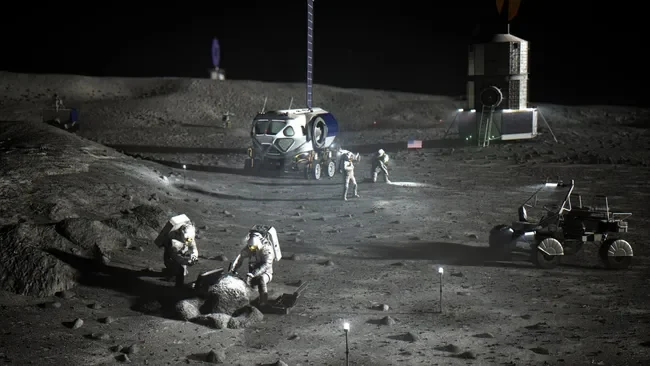
On the Moon, identifying water resources is a top priority, especially near the south pole. While scientists know water exists in the region, pinpointing exact locations remains challenging. A newly selected imaging instrument could soon provide high-resolution maps to guide landings, sample collection and long-term habitation.
Lunar dust is another major obstacle. During the Apollo missions, dust damaged equipment and caused health issues for astronauts. New missions aim to better understand dust behavior through advanced instruments like DUSTER and compact dust analyzers designed to withstand harsh lunar conditions.
Meanwhile, scientists are investigating whether Mars’ crustal magnetic fields could offer localized radiation protection. Miniature magnetometers deployed on aerial vehicles could help map these regions in detail, offering new insights into safer landing and habitation zones.
Together, these robotic efforts are shaping the future of human exploration. Scientists stressed that success on Mars and the Moon depends on combining robotic discoveries with human ingenuity, ensuring that when astronauts arrive, they do so with the best possible preparation.