






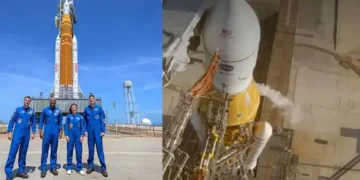


































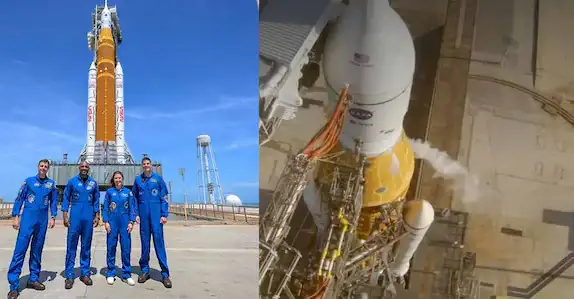
Washington, April 2, 2026: NASA has successfully launched its highly anticipated Artemis II mission, marking a historic step in humanity’s return to deep space exploration. The launch took place from the Kennedy Space Center using the powerful Space Launch System (SLS) rocket.
This mission is the first crewed journey to travel beyond low Earth orbit since Apollo 17 in 1972, ending a gap of more than five decades. The Artemis II mission will carry astronauts on a journey around the Moon, paving the way for future lunar landings and long-term exploration.
The crew includes astronauts Reid Wiseman, Victor Glover, Christina Koch, and Jeremy Hansen, who will orbit the Moon and return to Earth without landing. Their mission is considered a crucial test for upcoming lunar surface missions under NASA’s broader Artemis program.

A key objective of the Artemis missions is to establish the Lunar Gateway, a space station that will orbit the Moon and serve as a hub for future missions. This infrastructure is expected to enable sustained travel between Earth and the Moon and support long-term plans for human habitation.
NASA’s Artemis program is also seen as a stepping stone toward future missions to Mars. By developing technologies and experience through lunar exploration, scientists aim to prepare for deeper space missions, including the possibility of establishing human settlements beyond Earth.
The successful launch of Artemis II marks a major milestone in space exploration, reigniting global interest in lunar missions and setting the stage for a new era of human presence in space.