





























Dubai’s journey toward futuristic transport is accelerating, with air taxis preparing for takeoff and autonomous vehicles set to hit the roads sooner than expected. The emirate’s landmark Air Taxi project is already 80 per cent complete and will be ready for launch by the end of 2026, Roads and Transport Authority chief Mattar Al Tayer revealed at the World Government Summit.

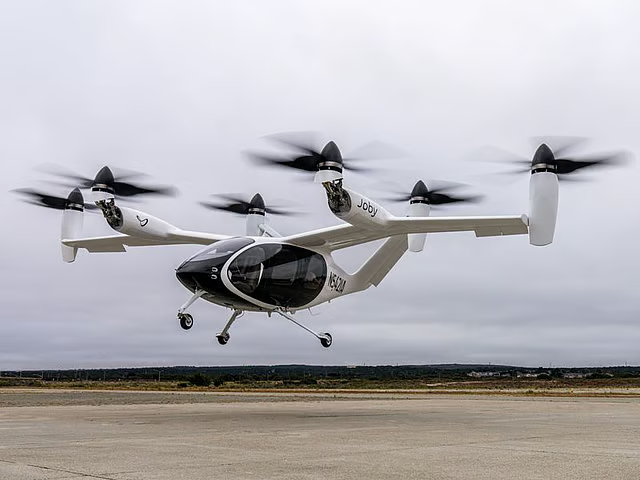
Developed in partnership with Joby Aviation, the Air Taxi service represents a major leap in urban mobility. Joby has been granted exclusive operating rights for six years and is currently conducting advanced trials as Dubai prepares to integrate air travel into its public transport network.
But the skies are not the only frontier. Driverless cars are also moving from concept to reality. The first phase will deploy 100 electric autonomous vehicles in selected zones, with plans to scale up to 1,000 vehicles citywide. Al Tayer said Dubai aims to see autonomous vehicles operating in multiple areas as early as the first quarter.
Dubai’s success, however, goes beyond technology. “The real secret is fast decision-making,” Al Tayer said, explaining how strong leadership, private-sector collaboration, and long-term vision have positioned the city as a global innovation hub.
From reducing taxi wait times to just three minutes through Hala Taxi, to signing partnerships with global giants like Uber and Baidu, Dubai continues to build an interconnected mobility ecosystem. All transport modes — including metro, taxis, air taxis, and autonomous vehicles — are being unified through Intelligent Transport Systems and advanced control centres.
With Dh175 billion invested in infrastructure over the past 20 years and traffic accident rates dropping dramatically, Dubai is also proving that innovation and safety can go hand in hand.
“Dubai operates as a global sandbox,” Al Tayer said, describing the emirate’s approach of testing, regulating, and scaling new technologies — turning bold ideas into everyday realities.