









































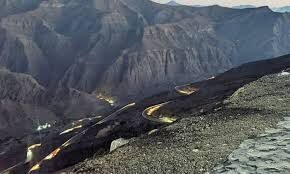
The Gulf region is widely associated with extreme heat, but history shows that winter can occasionally defy expectations. The coldest temperature ever recorded in the UAE was –5.7°C, measured on February 3, 2017, on the slopes of Jebel Jais, the country’s highest mountain in Ras Al Khaimah.

The reading was taken in the rugged Jais Mountain range, around 25 kilometres from Ras Al Khaimah city. Even during summer, the area is noticeably cooler than the rest of the UAE, but in winter it can resemble an entirely different climate. Long before becoming a popular tourism hub with attractions such as the Jais Adventure Park and the world’s longest zipline, Jebel Jais quietly earned its reputation as the coldest location in the country.
Winter in the UAE typically lasts from November to March, with daytime temperatures in coastal cities like Dubai and Abu Dhabi ranging between 15°C and 25°C. Mountainous regions, however, experience far colder conditions. During severe cold spells, temperatures in areas such as Jebel Jais can drop close to or below freezing, accompanied by frost, fog and strong northerly winds.
Meteorologists note that the coldest phase of winter usually occurs between mid-January and early February, a period locally known as Shabat. According to Ibrahim Al Jarwan, Chairman of the Emirates Astronomical Society, the sharpest cold typically begins around January 15 and lasts about eight days. Early-morning temperatures in inland areas can fall below 8°C, and sometimes under 5°C, driven by cold air masses originating from Siberia and the Arctic.
Weather forecasts indicate that winter conditions can still intensify, with stronger winds, reduced visibility due to dust, rough seas, and occasional rainfall affecting northern and coastal areas.
Across the wider Gulf, winter extremes are even more pronounced. Saudi Arabia recorded one of the region’s lowest temperatures at –10°C in Hail in January 2008, while northern cities such as Turaif are known for frequent frost days. In recent years, snowfall has also been reported in parts of northern Saudi Arabia, underlining the region’s capacity for rare but dramatic winter weather.
While such temperatures remain exceptions rather than the rule, they serve as a reminder that even the world’s hottest regions are not immune to the full range of seasonal extremes.