











































West Asia: Concerns are rising that the ongoing conflict in West Asia could widen further if Yemen’s Houthi armed group enters the war alongside Iran. After the closure of the Strait of Hormuz, analysts warn that another critical global shipping route – the Bab el-Mandeb Strait – could become the next flashpoint if the Houthis launch attacks.

Role of the Houthis
The Houthis, a Zaidi Shia armed group from Yemen, are considered part of the Iran-aligned resistance axis. Although they have not yet entered the current conflict directly, their leader Abdul-Malik al-Houthi recently stated that the group is ready to act if necessary.

Strategic calculations
Security analysts believe Iran may be delaying Houthi involvement as part of a broader war strategy, possibly to divert attention from US and Israeli operations. Intelligence reports suggest military preparations by Houthi forces near the Red Sea region.

Major threat to shipping
The Red Sea shipping corridor is one of the world’s most important maritime trade routes. During the Gaza war, Houthi attacks had disrupted shipping in the region for nearly two years, targeting vessels linked to Israel.
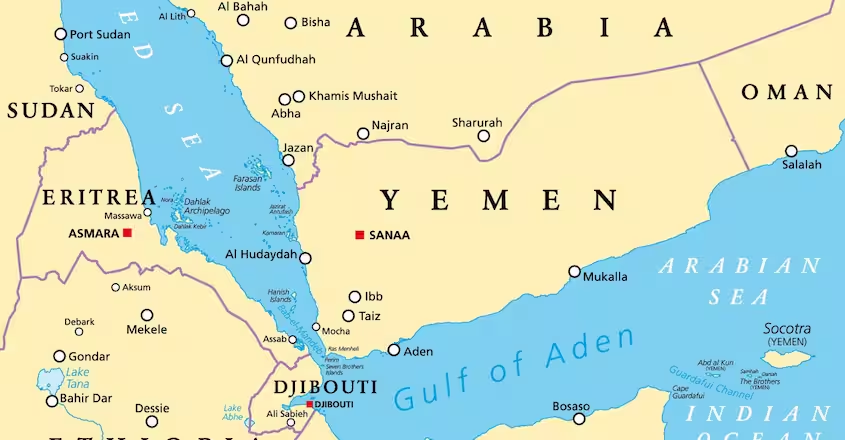
Importance of Bab el-Mandeb
The Bab el-Mandeb Strait, which connects the Red Sea and the Gulf of Aden, is a critical chokepoint for global trade.
- Width: about 32 km
- Ships passing annually: over 17,000
Without passing through this strait, vessels traveling from Asia to Europe cannot reach the Suez Canal.
Impact on global trade
If the strait becomes unsafe:
- Ships may need to reroute around the Cape of Good Hope
- Shipping times could increase by 10-15 days
Nearly 12% of global trade and 12% of seaborne crude oil shipments pass through this route.
Experts warn that Houthi involvement could significantly escalate the conflict and disrupt global supply chains.